

Our Latest News


Billie Eilish'S Grammy Speech Sparks Kevin O’Leary Showdown And Celebrity Drama
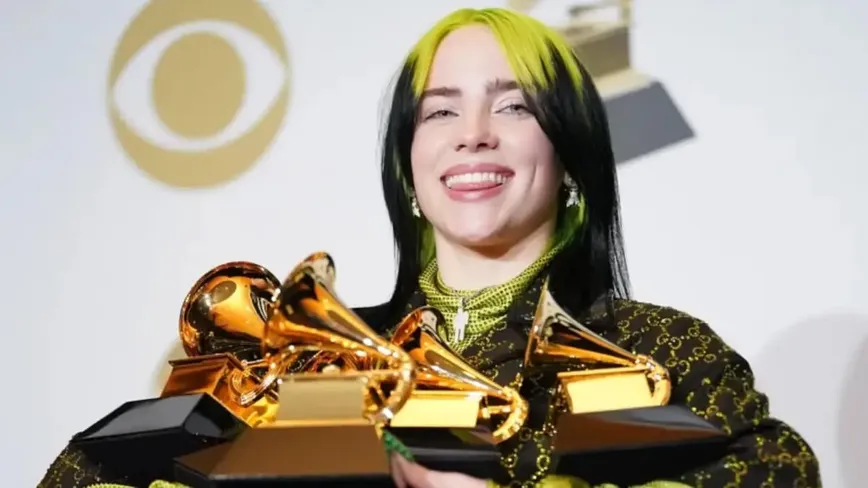
Billie Eilish's Bold Grammy Moment
A post-Grammys storm is brewing after Billie Eilish snagged the Song of the Year award and used her acceptance speech to make a bold political statement on U.S. immigration enforcement. Her words struck a chord when she declared, "No one is illegal on stolen land," urging fans to continue protesting and speaking out. Eilish, alongside her brother and collaborator Finneas O’Connell, even sported pins opposing immigration enforcement, a move that resonated with many but also stirred controversy.
The speech was met with applause in the room and quickly took social media by storm, sparking debates across political lines. Eilish's audacious move turned a simple award acceptance into a larger dialogue about the role of celebrities in political discourse.
“No one is illegal on stolen land,” declared Eilish, emphasizing her commitment to activism.
Kevin O’Leary's Critique Heats Up the Debate
Enter Kevin O’Leary, the Canadian businessman known for his no-nonsense style, who wasn't thrilled with Eilish’s political detour. O’Leary argued that musicians and actors should stick to entertainment and steer clear of politics. His pointed remark that stars should "shut your mouth and entertain" ignited further backlash, transforming the debate into a question of who gets to speak publicly rather than just a disagreement over immigration policy.
O’Leary’s comments quickly shifted the focus from immigration enforcement specifics to a broader conversation about whether celebrities should remain apolitical during high-profile events or if these stages are precisely where their cultural influence should be wielded.
Celebrity Reactions Fan the Flames
The controversy didn’t stop there. Actor Mark Ruffalo jumped into the fray, fiercely defending Eilish’s right to speak her mind. He wasn’t alone – other entertainers and online commentators echoed the sentiment that political expression is integral to art, not just an optional extra.
This exchange morphed into a battle of perspectives: supporters of Eilish framed the backlash as an attempt to censor speech, while O’Leary’s supporters viewed celebrity activism as out-of-touch and preachy. The intensity of this debate highlights the current media environment – one where short clips and rapid reactions often escalate rather than clarify the issues.
Why Now? The Timing Behind the Blow-up
This fiery exchange caught fire for a couple of reasons. The Grammys have increasingly become a platform for social commentary, priming audiences to see acceptance speeches as cultural messages rather than mere thank-yous. Plus, immigration enforcement remains a hot-button topic in U.S. politics, meaning even brief mentions can ignite strong responses.
Eilish’s win was a peak-attention moment, and any controversy linked to it gets amplified by the algorithmic boost following major live broadcasts. The debate thus became an extension of the awards show – an afterparty of discourse with more noise than resolution.
What's Next for Eilish and O’Leary?
For Billie Eilish, this episode is unlikely to shake her core fanbase, which has long embraced her as an activist artist. If anything, it reinforces her image as someone willing to use big stages for messages beyond music.
Kevin O’Leary, meanwhile, remains in the spotlight, but his stance risks narrowing his image to that of a provocateur rather than a business commentator. While he’s positioned himself as a straightforward critic of celebrity culture, this moment challenges whether the "stay in your lane" argument is consistently applied.
Key Takeaways
- Eilish’s speech criticized U.S. immigration enforcement and called for protest.
- O’Leary’s response shifted the conversation to whether entertainers should engage in politics.
- Celebrity reactions expanded the debate into a broader discussion of speech and power.
The Larger Implications
The immediate question is whether either side will de-escalate, either quietly or through further statements. However, the bigger picture is clear: award stages are no longer neutral ground. They are political moments, and the ensuing reaction economy ensures that a single line can spark a multi-day story. The Eilish–O’Leary clash serves as a reminder that post-award show discussions often focus more on what winners say than on who actually won.
Categories:

Author: Zoe

Zoe
PHOTO









POPULAR